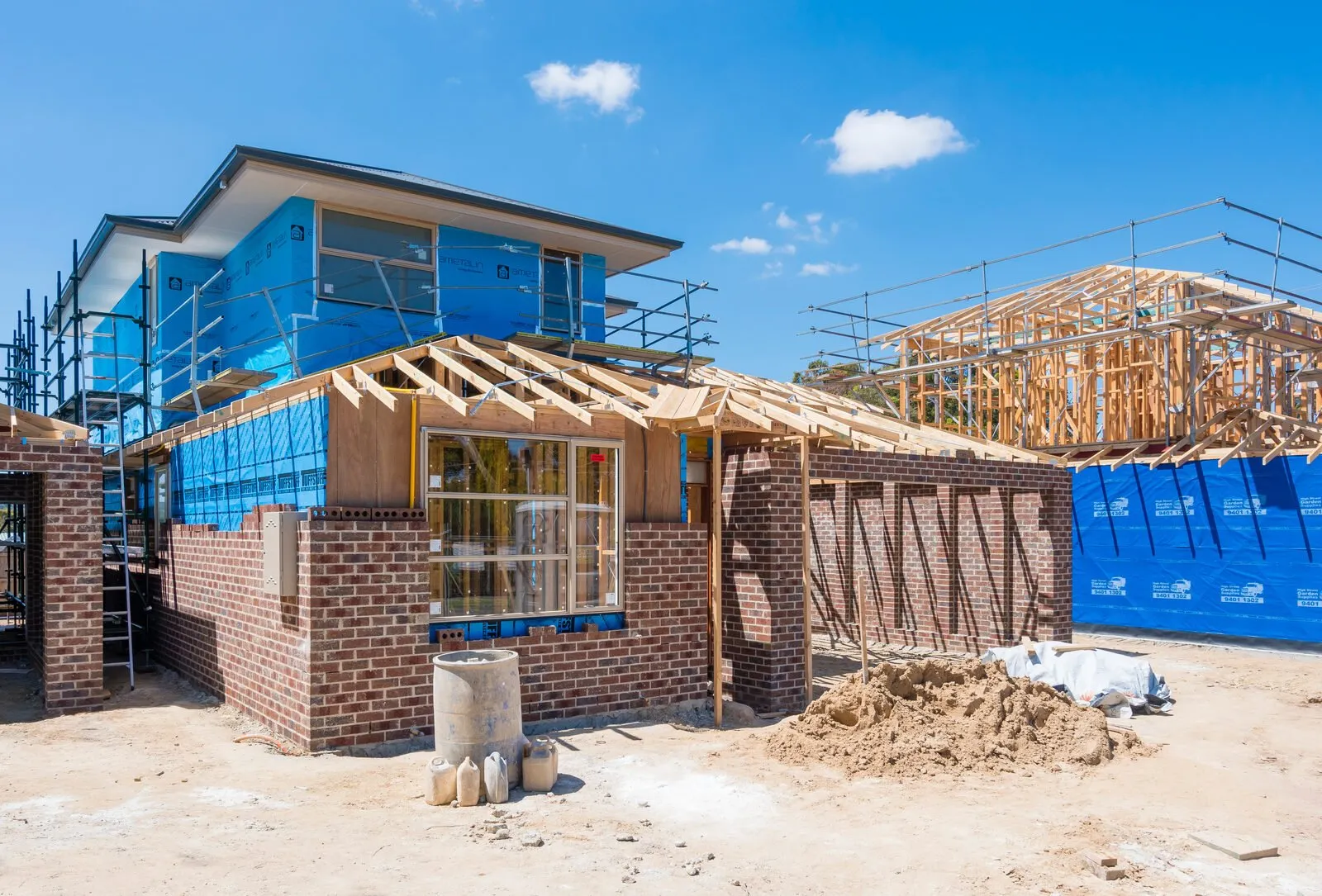
Reactive Clay Soil in Brisbane: What It Does to Your Footing Budget
Why two identical houses on the same Brisbane street can differ by tens of thousands in footing cost, how AS 2870 site classification works, and when to get the soil test.
The cost nobody mentions until slab stage
Clients regularly ask why one builder's quote is well below another's for what looks like the same house. Often the answer is that one of them has a soil test and the other has an assumption.
Large parts of Brisbane sit on reactive clay — soil that expands when it takes on moisture and contracts when it dries out. That movement is seasonal, it is significant, and a slab that is not designed for it will crack, along with the walls sitting on top of it.
The engineering response is a footing system stiff enough to resist that movement. It costs considerably more than a conventional slab, and it is not optional.
How site classification works
Australian Standard AS 2870 sets out how residential sites are classified for footing design. A geotechnical engineer takes bore samples, assesses the soil profile, and assigns a classification based on the expected surface movement.
Stable sand and rock sites sit at the low end and take a straightforward slab. Moderately reactive clay sites need more. Highly reactive sites need a stiffened raft with deeper beams and more reinforcement, or a piered system taking the load down to stable material.
Sites with uncontrolled fill, previous excavation, or abnormal moisture conditions fall into a category that needs specific engineering rather than a standard solution — and these turn up more often than people expect on blocks that have been subdivided or previously built on.
Why the existing house tells you nothing
This is the trap in knockdown rebuild projects. Owners reasonably assume that because the old house has stood for sixty years without problems, the ground must be fine.
Old Queenslanders and post-war homes are typically on stumps or piers. A stumped house tolerates ground movement because the structure is flexible and individual stumps can be adjusted. A concrete slab cannot. It is a single rigid element, and reactive ground under it has nowhere to go.
So a block that has happily supported a timber house on stumps for decades may still be classified as highly reactive, and the slab for the replacement house may need an engineered footing system costing several times a standard slab.
Trees, drainage and moisture
Large trees near a building make reactive soil worse. They draw moisture out of the clay in dry periods, causing localised shrinkage, and when they are removed the soil rehydrates and swells. Both movements are uneven, which is what causes damage.
Poor drainage produces the same problem from the other direction. Water pooling against one side of a slab keeps that clay expanded while the other side dries, and differential movement follows.
This is why site drainage, downpipe discharge and paving falls are not finishing details. On a reactive site they are part of the structural strategy, and getting them wrong can undo an expensive footing system.
When to get the test
Before design, and ideally before purchase if you have the option. A soil test costs a small fraction of what an engineered footing system costs, and knowing the classification early lets you make sensible decisions about house size, siting and budget.
If you are comparing builder quotes, ask each one what site classification they have priced to. If they cannot tell you, they have not priced your block — they have priced a generic one, and the difference will appear as a variation.
We get the soil test done before quoting on every project. It makes our first number slower to produce and much more likely to be the number you actually pay. If you are weighing up a site, our Brisbane custom build page covers how we work through site conditions before design.