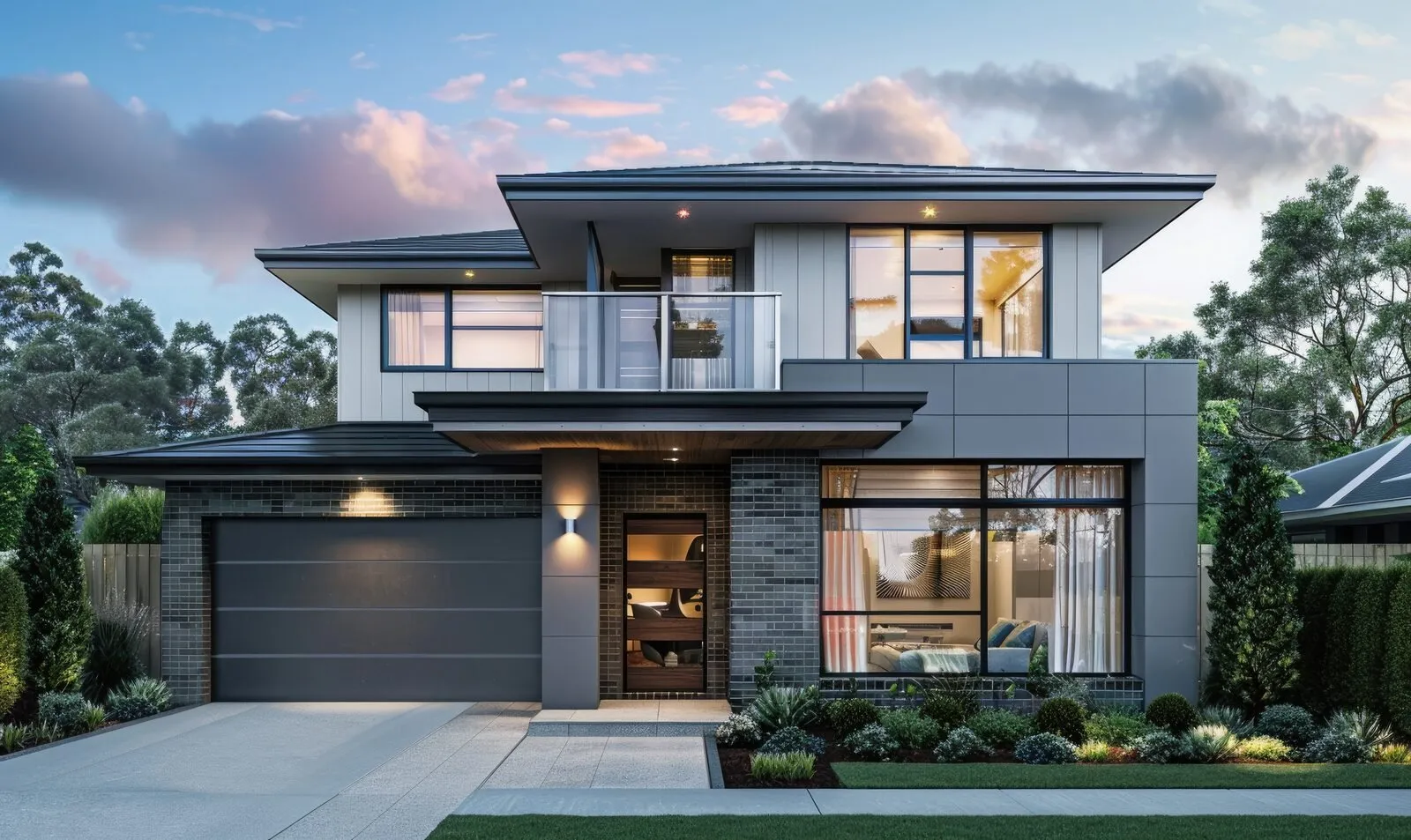
Volume Builder or Custom Builder: Which Suits Your Block?
An honest comparison of the two models — what each does well, what each costs, and the block and brief conditions that should push you toward one or the other.
Two different products, not two grades of the same one
A volume builder sells a refined product: a plan built many times, with established supplier pricing, a known program, and a process designed for repeatability. A custom builder sells a process: a house designed for one site and one brief.
Neither is better in the abstract. They suit different situations, and the mistake is buying one when your circumstances call for the other.
We are a custom builder, and the honest position is that on some blocks a volume builder will beat us on price for a result you would be perfectly happy with. It is worth knowing which situation you are in.
When a volume builder is the right answer
A flat, stable, serviced block in a new estate, with no significant overlays and no demolition, is the situation the volume model was built for. If a standard plan genuinely suits your family and your block, you will get a competent house at a price a custom builder cannot match.
If the timeline matters more than the specifics, the volume model is also generally faster, because the plan is already documented and the trades already know it.
And if you are building to rent or to sell in a corridor where the comparable sales do not reward extra specification, the disciplined cost control of the volume model is an advantage rather than a compromise.
When the volume model struggles
Sloping blocks, narrow frontages, awkward orientation and challenging access are all situations where a standard plan has to be modified until the savings disappear and the compromises remain.
Overlays are the other trigger. A character overlay, a significant flood level, a high bushfire rating or vegetation constraints all impose requirements that a plan library was not drawn around.
Established blocks with existing houses, mature trees and neighbours on both sides also tend to defeat the model, because the standard process assumes a clear site.
And if your brief is genuinely specific — multi-generational living, a home office that actually works, a response to a particular view or breeze — a customisation menu will get you close and not all the way.
The differences that show up during the build
Site management is the practical one. In a volume operation a supervisor typically runs many jobs at once, which works when everything is standard and is tested when it is not. On a custom build the person managing the site is managing far fewer projects.
Variations behave differently too. In a volume contract the plan is fixed and changes are expensive by design, which is part of how the price is held. On a custom build changes are more feasible, which is an advantage and also a discipline you have to impose on yourself.
Selections work differently. Volume builders offer defined ranges with upgrade pricing. Custom builds are specified item by item, which gives more control and requires more decisions from you.
How to decide
Look at your block first. If it is flat, clear, serviced and unencumbered by overlays, get quotes from both and compare honestly. If it slopes, sits under an overlay, has an existing house on it, or has an unusual shape, the custom path will usually cost less than a heavily modified standard plan.
Then look at your brief. If you can see a standard plan that genuinely suits how you live, that is a real answer and you should take it.
Whichever way you go, check the QBCC licence, confirm the deposit does not exceed the 5 per cent cap for contracts over $20,000, and read what the provisional sums cover. Those apply equally to both models.
If you want a straight opinion on which suits your situation, send us the address and the brief. Our Brisbane custom build page sets out how we assess a site, and we will tell you if we are not the right builder for it.